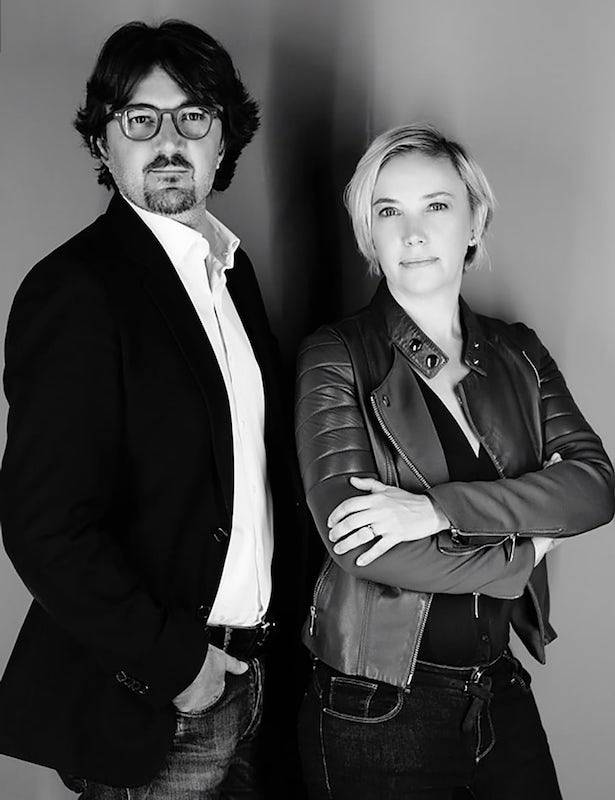
Ronan & Erwan Bouroullec are known as much for their technical expertise as for their graceful artistry. Celebrated first by the launch of the Kaari collection in 2015, their work for Artek has been truthful to the companys ethos of embodying Art & Technology, what Bauhaus founder Walter Gropius famously referred to as a new unity.
In a new venture bringing together industrial production with artistic sensibility, Ronan & Erwan Bouroullec have designed the Rope Chair and Tupla Wall Hook: surprising silhouettes that meet sophisticated constructions in a synthesis of art and technology.
The Rope Chair is more of a silhouette than a solid block, a line drawing translated into space. Made for marine use, the rope is a weight-bearing part of the construction and it allows the chair to adapt to those who use it, offering unexpected comfort. A synthesis of contrasts, the Rope Chair combines sophisticated engineering and creative expression, a solid structure and flexible elements, stiff tubes and pliable rope.
The city of Medina in Saudi Arabia is pivotal to the religion of Islam for its historical significance as the migration place of the holy prophet Muhammad. Today, it is the power base of Islam and a congregation place for thousands of Muslims, who come to visit the three prominent mosques that the city is famous for?Anwar Al Madinah Movenpick Hotel is the largest hotel in the city, with an astounding 1,500 rooms to serve its guests. Located very close to the prophet Muhammad?s mosque, the hotel caters to families, individuals, and leisure groups and boasts its own three-floor shopping mall. In light of its significance within the city of Medina, CAS was charged with upgrading the outdated design of the royal floor of the hotel by implementing a modern classic design. The refurbished?royal suite design?is elegant and luxurious, designed to provide its guests with every conceivable comfort.
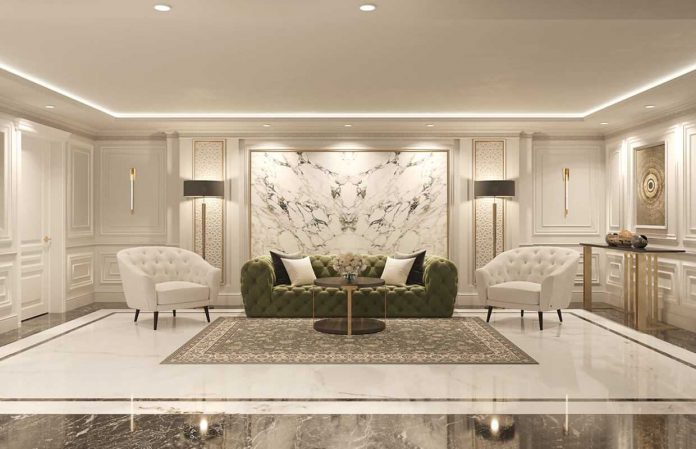
Modern classic design is characterized by a merging of classical elements (such as moldings) with clean, spacious surrounds that feature straight, orthogonal lines. This basic premise is evident throughout the?royal suite design, where modern and classic elements are seamlessly blended to create rich, inspiring spaces befitting royalty. The entrance lobby to the royal floor sets the tone for the rest of the design. The original dark wooden doors and panels have been replaced with light white walls and expansive marble flooring. Walls are embellished with perfectly proportioned panels framed with classic moldings. An intricate geometric pattern that is characteristic of Islamic architecture adorns adjacent walls, complementing the paneled walls. Sleek, modern furniture with gold accents adds a richness to the minimally furnished lobby. The lobby is subtly lit with concealed LED lights and downlights, which are flush-mounted in the ceiling. To emphasize the feeling of openness, the ceiling is designed as a simple, recessed rectangle that mimics the shape of the elongated lobby. The light, neutral color palette is sophisticated, conveying a feeling of spaciousness that creates a welcoming and striking first impression of the royal suite floor.
The majlis is a grand room with a predominantly light color palette that exudes calm and serenity. The large, coffered ceiling with its dropped central panel is echoed in the minimalist, carpet-like floor tiling pattern with its olive-green panel bordered by broad white panels. Gold accents are generously used in the sleek furniture, majestic central chandelier, and the geometrically patterned mashrabiya-style panels flanking the flat-screen television. Ornate sliding doors engraved with an intricate geometric pattern act as a divider between the majlis and dining room and also serve as a splendid backdrop for a pair of classic, white armchairs. Olive-green tufted sofas match the color on the central panel of the luxurious carpet and also set off similarly colored drapery that lines the window panels. The vibe is one of muted elegance, with a touch of grandiose provided by the gold accents.
The adjacent dining room continues with this theme, adopting the same olive-green accent color for the tufted upholstery on the dining room chairs. A backdrop of mirrors shaped as pointed arches are set in rectangular frames to introduce a hint of inspiration from Islamic d?cor. The mirrors also serve to make the room appear larger. A solid wooden table, which is the centerpiece of the dining area, is emphasized by the rectangular, tiered chandelier that is elegantly suspended from the recessed ceiling.
The prayer room, which lies on the other side of the majlis, is a serene sanctuary of peace and calm. Designed mostly in soft shades of beige and cream, most of this restful room is covered by a luxurious central carpet. The room is lit by bright lights that are concealed in the recessed ceiling panel. A lustrous floor-to-wall painting creates a visually striking backdrop for a built-in seat adorned with cushions. A series of pointed arches line one wall, alluding to the Islamic architectural influence, while the a opposite wall is designed as a recessed book case with open shelving.
The first royal bedroom in the royal suite design is an elaborate space divided broadly into the master bed area and the lounging area. Rich, walnut-colored parquet flooring provides a warm, welcoming feel that tastefully contrasts with the light-colored walls and ceiling. The walls are emphasized by an intricate geometric pattern and framed with a gold inlay. The master bed is luxuriously spacious, featuring a large, upholstered headboard, which is fashioned in a light beige color. Patterned reflective panels form a glossy backdrop to the bed, which is set on a magnificent round carpet. A round chandelier above the bed further emphasizes the circular geometry of the carpet. A flat-screen television is set into a marble-paneled wall opposite the bed. Soft, decadent fabrics line the windows, which counter the hard surfaces in the room. A curved loveseat is nestled into one corner of the room to create a relaxing lounging area. A pointed arch frames a muted, patterned, mirrored surface that forms the backdrop to the loveseat.
The royal bathroom is the ultimate in luxury. Decorated with a bold flooring pattern, the white walls are kept simple with rectangular molded panels to give the bathroom a bright, spacious vibe. White fittings (accented with gold for an opulent vibe) rest unobtrusively on the bold, patterned floor. A ribbed, gold-paneled wall provides a lavish backdrop for a stand-alone bathtub. An olive-green upholstered loveseat offers a place to sit and adds a subtle pop of color to the predominantly white room.
The second royal bedroom is warmly decorated in rich walnut tones and juxtaposed with olive-green accents. A small seating area, which offers a cozy alcove for watching television, is situated opposite the bed. Flanked by two ornately decorated pointed arches, the television is set into a wooden wall panel that matches the color of the flooring. The room is a delicate balance of soft and hard surfaces, comfort and grandeur, and modern and classic profiles.
Following the design style of the other bathrooms, the second bathroom also uses marble with a bold veining pattern that creates a dramatic backdrop for the white-and-gold fittings. Wall panels with classic moldings are juxtaposed with marble-veined walls to create visual impact. Mirrored surfaces reflect the bright lighting, making the bathroom seem larger and more spacious. A decadent jacuzzi is set against a ribbed, gold-paneled wall; the gold paneling screens the jacuzzi and also picks up on the other gold accents in the bathroom.
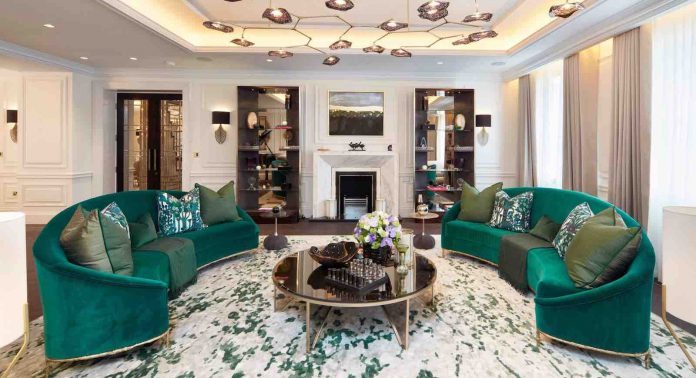
Clean, spacious, and minimally furnished, the executive suite living room uses a white color palette with gold and olive-green accents to pack a punch. Paneled walls with classic moldings embellish the walls. The flooring is mostly white with an olive-green tiled border that matches the furniture accents. Light fixtures are sleek and streamlined, gilded in gold to match the large, gold-framed mirrors that grace the walls. Thin-legged gold-gilded coffee tables accessorize the lounge chairs and sofas, which are covered in plush velvet upholstery. The living room is separated into a lounging area and a cozy dining nook. An olive-green couch is tucked into a recessed niche and is flanked by two built-in bookcases with open, white shelving. Each shelf is lit with concealed LED lights. The white surfaces reflect light, making the executive suite living room appear fresh, spacious, and brightly lit. Moreover, the clean lines of the room balance out the gentle curves of the furniture, highlighting the seamless meeting of modern and classic design.
The bathroom follows the same pattern as the other bathrooms in the?royal suite design. The lower half of the wall is tiled with heavily veined, patterned marble, while the top part of the wall has molded paneling. White fittings with gold accents pick up on the geometrically shaped, gold light fixtures. White marble flooring with gold inlay completes the d?cor, which is chic and classy. The merging of modern and classical d?cor elements adds an elegance and sophistication that uplifts the look and feel of the?royal suite design. White paneled walls create a formal feel, while gold accents add a generous sprinkling of luxury to the interior spaces, which are designed to provide ultimate comfort and luxury for their users.
When an interior designer starts to become synonymous with a certain look, you know they?re executing it to absolute perfection. British interior designer?Sophie Paterson?is a prime example, as she?s fast establishing an international following and reputation for her rustic chic interiors ? a look that?s become an inherent part of her signature classic contemporary style.
What does rustic chic look like? An ultra-tasteful balance of rustic elements and luxurious touches is a simple way to sum up the relaxed, sophisticated aesthetic. We caught up with the interior designer for a masterclass in this very fresh yet timeless look.
THE INSPIRATION
Since founding her studio in 2008, Sophie has experimented with a mix of rustic chic and contemporary design elements but began to really adopt this look in her projects after moving house. ?Moving to Surrey had a big influence on me in terms of embracing a more rustic chic slant on my interiors,? explains the designer. ?I now live in a property that is suited to this style, as opposed to my previous mews house in South Kensington which was very sleek.?
Hampton interiors and a love for antiques also played a part in inspiring the designer to tap into a rustic chic aesthetic. ?I love interiors in the Hamptons [and] anything that has been designed by Lady Bamford ? her Daylesford brand and buildings are the epitome of rustic chic perfection,? says Sophie. ?I also love weathered oak antiques, which I buy in Holland, and going to the Cotswolds and Petworth in West Sussex to look for rustic antiques. I?m always on the Internet looking at Pinterest. I have a huge collection of inspiration images for the rustic chic look and I also buy a lot of weathered antiques online.?
When it comes to achieving rustic chic interiors, Sophie explains there are go-to colour schemes, materials and finishes that work beautifully for the look.
1. COLOUR PALETTES
?Greys, blues, taupes and creams all work very well with this look,? Sophie advises. ?Stronger colours that we occasionally use, such as gold, yellow, green, red [and] purple, tend to overpower this look which should be very natural and muted.?
?I like combining different rustic materials, such as limed wood, grey wicker, linen, leather, wool and sisal?rugs, and juxtaposing these with more luxurious finishes ? from high-gloss woods to silks, cashmeres and velvets.?
Carefully chosen?furniture?pieces are vital for cementing a rustic vibe. Sophie looks to antique furniture designs, loose-cover skirted?sofas?in linen and furniture with a limed finish. These rustic pieces are then balanced with elegant updates: ?I might add an ?glomis??mirror, faux shagreen elements [or] beautiful?accessories, which ensure there is still an element of luxe evident within a rustic chic interior,? say Sophie.
?If you?re not sure you want to fully embrace the look but like the understated sophistication it can add to a property, start with a few small accessories such as grey chunky wicker baskets (the wicker you choose is very important ? nothing too orangey or yellow, it must be taupe/grey and chunky) then add some rustic linen?cushions?and some crackle glaze pottery.?
With any look, there are particular elements that can hinder the style you?re trying to execute. For rustic chic, Sophie recommends avoiding overly shiny or synthetic fabrics as ?it can clash with the natural elements.? Perfecting rustic chic is also very much about knowing when to work the look and getting the balance right. Sophie explains: ?Unless I designed a country cottage or a ski chalet I don?t think I would ever design the whole of an interior with a rustic chic style, but most properties benefit from a touch of it, even if it?s just a couple of grey wicker baskets that add a contrast to the sleek marble in a bathroom.?
?You need to know when it is appropriate,? continues Sophie, ?If a client wanted to use this look in a grand Mayfair townhouse, for example, I?d let them know that it wasn?t appropriate for the?sitting room, but there is nothing to stop you from having a rustic look in the kitchen in any property.?
The beautiful combination of rustic mainstays with plush contemporary touches means the look has a multidimensional appeal, working a modern and traditional allure. This meeting of juxtaposing elements is what appeals to Sophie and keeps her referencing the look in projects time and time again. ?I like mixing in different elements into my interiors,? says Sophie, ?and I?ve always been an advocate of subtle luxury rather than having lots of designer or statement items. I like to have a couple of statement pieces and then combine these with more understated pieces. The rustic chic items add a casual, collected look to the interior that makes it feel more homely.?
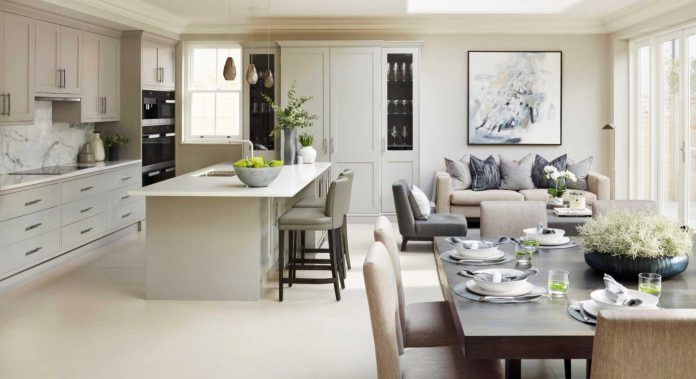
Of all the rustic chic rooms Sophie has designed, the living room and kitchen sitting area of her Esher project really stand out for her. With an effortlessly beautiful neutral colour scheme, aged accents, modern silhouettes and relaxed finishes, it?s easy to see why this open plan space features at the top of her most-loved rustic chic creations.
?My own TV room at home, which hasn?t been photographed yet, is probably my all-time favourite,? the designer tells. ?It combines all of my favourite finishes such as grass cloth wallpaper, blinds using de Le Cuona linen, lots of limed wood with a grey finish, and cashmere?throws.?
Another draw of rustic chic has to be its versatile ability to slot into different styles of properties. Sophie is a firm believer that the look can be translated into both classic and contemporary homes.
?It?s just a question of knowing which rooms should feel more formal and grand, and which rooms would benefit from a more relaxed, rustic look,? says Sophie. ?Kitchens and bathrooms are always a safe place to start.?
Beautiful for modern and traditional spaces, summer and winter, now and years to come, rustic chic is one of those forever looks that?s in no danger of going out of style and promises to only look better with age.
On the one hand, a statement piece, be that a jewel-coloured sofa or show-stopping marble sculpture, is about acting as a beacon which draws the eye unlike any other item in your living room. Yet on the other, statement possessions can be unassuming things that wait to be noticed and then behave as anything but a wallflower the saying, it’s always the quiet ones rings true in this design scenario.
The question is, how loud and proud do you want your living room statement to be, and what tool do you wish to call upon to help you make it
In a lounge setting, the obvious place to make some noise is in the upholstery. Turn to a statement chair if the scale of a sofa feels intimidating, and remember that it’s not always a case of fabric choice; the style and shape of your furniture plays its part in causing a stir.
In this soaring ceiling Goddard Little fair living room there’s both a statement sofa hard to deny it this status because of the lustrous tangerine orange velvet fabric and two statement chairs whose rounded tub shape cuts a sharp contrast in comparison to the other clean-lined silhouettes in the room.
Furniture that wants to be heard can be about volume and vibrancy, or simply what grabs your eye and steals its focus away from another element in the room.
There are some staple pieces in the living room, such as table surfaces and storage providers, that are ripe for standing out from the crowd. Statement furniture can be interpreted by:
Material perhaps a coffee table in an unexpected material like glossy granite rather than wood or glass; by size increase the footprint and go oversized and it’ll be hard to ignore.
Colour develop your colour palette by using furniture as an area to introduce an accent hue
Function could you invite a piece of furniture that’s not typically seen in a living room like an antique-inspired escritoire that you’ve styled as a bar or unearth a maverick design whose statement only becomes clear when it’s in use and you appreciate its ingenious and intriguing functionality
This can be one of the most mesmerising spectacles your living room gets to see. Statement lighting is not purely a case of choosing a beguiling light source, but knowing how to apply it to the room.
Elicyon’s contemporary chandelier is a case in point. Statement-worthy because of the beautiful simplicity in every slender shaft of light, but also because of the arresting effect they have en masse suspended from the ceiling where it feels as though you’re under a shower of shooting stars or torrents of golden rain. Illumination is where the statement is three-fold the light itself, the beam provided, and the transformative outcome it has on the entire living room.
Furniture and lighting step aside, because statement artwork has the potential to usurp everything else in the room for one basic reason art is a spectator sport.
While your eye will naturally read everything in a living room scheme, most of the larger items there are for use. Sofas and chairs are to be sat on, coffee tables and side tables serve as resting places for drinks and magazines and so forth.
Artwork however is there to be viewed, absorbed and admired. It’s known for being a window to the owners soul, their preferences and peculiarities. Art says a lot about a person, so the statement runs pretty deep. Take the art supersize of course, and the statement becomes all the more vocal, just as the sultry Greg Natale living room pictured.
You can have real fun with statement mirrors and their design is the first point to note. Much like a piece of art, a mirrors frame adds decoration, texture and personality to interior decoration.
With a mirror, a living room can suddenly have a Baroque dimension, a Sub-Saharan vibe or a beach chic undertone that wouldn’t be out of place in The Hamptons. They make their presence felt and are more than capable of carrying big character.
The glass itself can be a statement-maker as much as the frame if you choose a playful fishbowl effect or an angular shape a triangular or hexagonal mirror is bound to catch your eye.
The other side to a mirrors statement is what you’re choosing to reflect. Position it cunningly and you’ll be able to reflect back your rooms protagonist so you can appreciate the same statement twice.
Image Credit: Rug Society
6 .STATEMENT RUGS
Take things to the floor and you’ll step straight into and onto a statement. By thinking feet-first, a statement rug brings a dose of drama to your flooring and means that there’s the hum of something brave and bold that grounds the entire scheme
While many interior designers will urge you to get the biggest rug both you can your room can afford that doesn’t mean there’s no place for smaller rugs. You can use these to highlight a smaller zone in your living room in a way that will change the pace and set a fresh tone.
For example, if you’ve allocated a portion of the room to a petite dining table and chair setup, a statement rug helps to delineate it as an area with a different function.
Similarly, if you want a cosy reading corner, seek out a smaller sheepskin or loop-pile rug and the statement will very eloquently say this is where things get cool, calm and collected.
Image Credit: Greg Natale
7 .STATEMENT WALLPAPER
From walls to floor and back again, but this time the statement is more about the two-dimensional than the three. Paint colour is one approach for making a splash on your living room walls, but the resurgence of wallpaper is where you can flood them with pattern, print, texture and a plethora of tones.
Decide whether your wallpapers going to pick up on one of the existing colours in the room or reference one that’s yet to be used. Whether it’s going to repeat a pattern seen on your upholstery and simply take it to a bigger scale or if you want to try something new and diverse. Finally whether you want to wallpaper every wall in sight or to make a feature with just one. It’s the elegant and enduring grown-up’s graffiti.
Founded in 2005, Caberlon Caroppi Italian Touch Architects studio wants to mix and share different experiences to create new concepts in hospitality design. From hotels, restaurants, and shops, to showrooms, stands and cinemas, the studio’s incredible design projects concentrate their research on atmosphere, lighting, materials and colors. Their work is finished once the visitor is able to perceive space in the way they’ve created it and interacts with it while passing through it.
Ranging from different styles, the renowned Italian architecture and design studio searches inspiration for their design projects in the histories and atmospheres within the spirit of each place. Specialized in luxury hospitality design projects, Caberlon Caroppi’s design studio carries out consultancy for hotel management companies, service companies Real estate development companies, and private clients.
They have worked with some of the best luxury hospitality names, such as Intercontinental (Holiday Inn, Crowne Plaza, Indigo), Hilton (DoubleTree, Garden Inn), Starwood (Four Points), Carlson Reizton Hotels Group (Radisson Blu), Marriott (Courtyard by Marriott), The Ritz-Carlton, among others. Famous for creating each design project customized to its essence, the Italian design studio selects several design products, created for the catalogs of prestigious Italian brands, that were inspired by the hotel project.
The Italian design studio is also starting to become one of the main references in Spa and gyms design and from 2013 they opened several international shipyards in Russia, Africa, Kazakhstan and Armenia, including a Hilton DoubleTree in Armenia, April 2015, and Chimuco Wellness Centre in Angola. The studio’s projects have been published in numerous magazines and trade publications and have won several design awards, such as Finalisti con due progetti al SBID International Design Award 2017, Vincitore dei premi Travellers Choice 2014 Enjoy Garda Hotel and Vincitore dei premi Travellers Choice 2012. In 2015 they celebrated the milestone of 100 projects in 10 years.
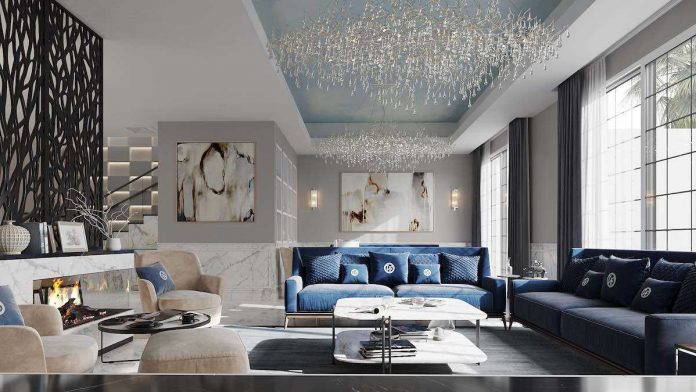
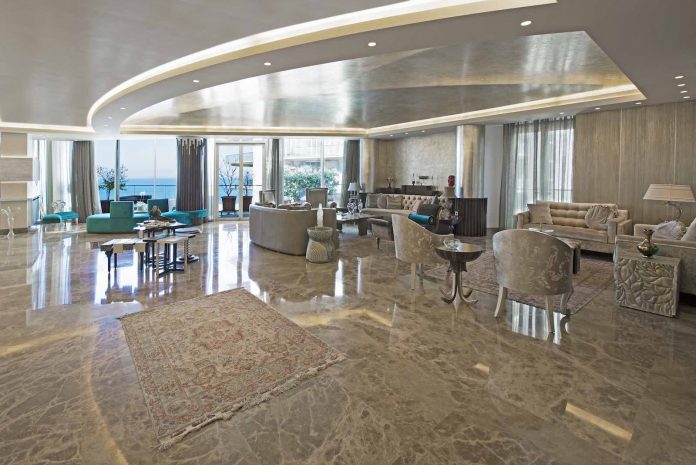
Our design for this living room at Al Zahia villa providing Luxury, simplicity, and fresh environment in just one place.
Consider this sought-after stone that adds glamour with ease!
Marble has been associated with quality and luxury for thousands of years. Each piece is different, and it’s this that makes it so desirable. That’s why we have chosen it in our luxurious design.
Cool and calm. Refreshing and serene. Mellow and classy. You’ll immediately realize why whites and beiges go so well with navy blue.
Beige is a classic high-contrast partner that sets off the deep-sea hue and gives navy blue a lively lift!
These pairs describe another irresistible duo, according to color psychology.
Did you know that this shade of blue is called ‘Persian Blue’
By the way, Blues can adjust to any decor, and here it is a beautiful, rich Persian blue sofa combined with beige furniture for a bright & modern atmosphere.
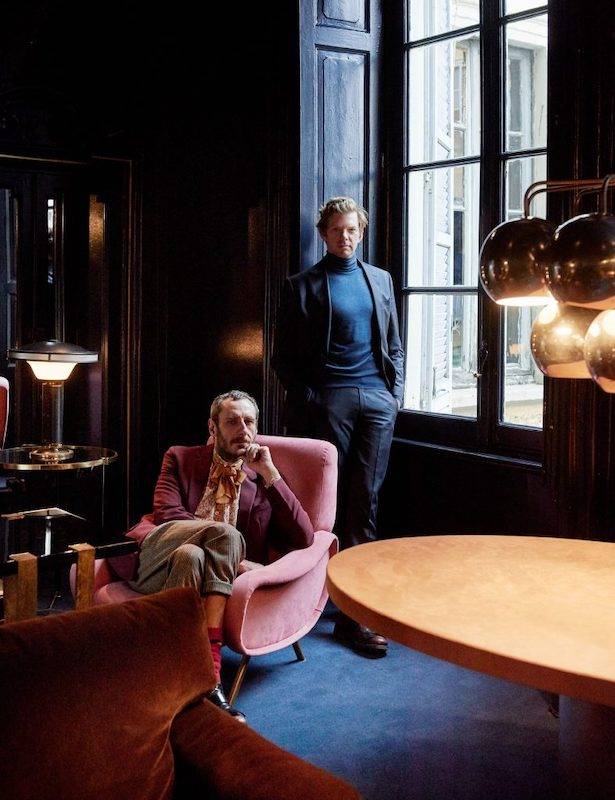
?DIMORESTUDIO interprets memories and creates dreams. DIMORESTUDIO crosses the boundaries between art and design, fashion and architecture.?
In 2003, Emiliano Salci and Britt Moran joined forces and invested in their individual experience with the profession and study of Design, Art and Fashion, and founded the know iconic DIMORESTUDIO, one of the most prestigious design studios of the city of Milan. Since that moment, tSalci and Moran have designed and carried out every project in a personal and recognizable way that allowed them to create a timeless visual and an emotional pathway that embraces a powerful and unique style!
They also have the DIMOREGALLERY which is a home, a journey, an experience, a dialogue between past and present. Every object selected or created by designers Emiliano Salci and Britt Moran has a story and an allure capturing the imagination in a way in which only art and design are able, and they use the DIMOREGALLERY to showcase the art and essence behind all those objects. Each room unveils a different emotion (joy, surprise, nostalgia) leading the visitor towards the discovery of elusive colors and precious materials, where the quest for form reveals the presence of objects and makes this journey unique and emotive.
In all these years of existence, DIMORESTUDIO have built a name for mixing a decadent aesthetic of jewelled tones, distinctive textiles, vintage furniture, and contemporary artwork, and all in a way that without experiencing it for yourself, might make you question if it could all really work together. They have been responsible for stunning projects across the planet, but some of their most exquisite projects can be found in Europe and they include the FENDI store in Montecarlo, the Leo?s Arts Club in London or the Aesop Corso Magenta in Milan!
mecansimo results from the combination of a profound interest in materials and a careful execution of ideas, all this developed with a clear obsession for investigation and innovation of new concepts.
The materialization of this ideas resulted to create the architectural studio based in Madrid, and founded in 2012 by Marta Urtasun and Pedro Rica. Specialized in the development and execution of projects, systems and products related to design and architecture. Our work comprehends the complete creative process, from the conceptual idea, to the detailed design.
Hotel Akelarre is the result of a more than forty years of identity and development. Is the blend between tradition and time with the obsession for investigation and innovation. It’s accurately the symbiosis in the integration of context and innovation that defines the spirit of Hotel Akelarre.
In this ambiance, Mecanismo conceived a precise project of design and construction of the hotel. The accurate selection of materials, furniture and the detailed execution distinguishes Hotel Akelarresan the materials as the link between concept, form and function. The use of natural resources and whilst materials stone, wood and linen respect the inner nature and properties in the process, as well as, contemplating the advances of investigation and new techniques for their manipulation and induction, that characterizes the project and studio itself.
The avail of different materials in each volumetric construction and the thereon in the succession of materials that often, interfere and modify a geometry shape and or volume defines the concept and functioning of the project while simultaneously granting a unique and diverse atmosphere, providing Akelarre with an unequivocal personality.
The Hotel is located a few kilometres away from the centre of San Sebastian, in the North side of mount Igueldo, facing the Cantabric Sea, wrapping the building that hosts the famous three Michelin star restaurant.
Five stone cubicles emerge from the hillside of the mountain towards the sea, harbouring in their interior the rooms. The hotel offers, a total of twenty-two rooms, in two levels, all of them newly built and oriented to the sea and functionally similar regardless of their dimension or category.
Slightly sunk on the deck of stone cubicles, six spaces of cured silhouettes integrate the hotel terraces.
These terraces, which are carved in stone, join the rest of the platform by a planked space and gardened areas, all of which seek a stunning view to the horizon.
A strand completely covered in wood, runs longitudinally at every level, in a way that a circulation space by the cubes, connect with the common areas of the hotel wellness, snack bar, wine cellar and the lounge. Each of these spaces have a different and independent scenario that connect the whole via with an equal formal language and material.
In this line, the Oteiza snack bar depicts a divergent style from the restaurant, keeping a coherent and undeniable latter. The general amplitude of the space seeks to welcome the visitor, together with a lighting that receives the panoramic sights from the windows that settle the space.
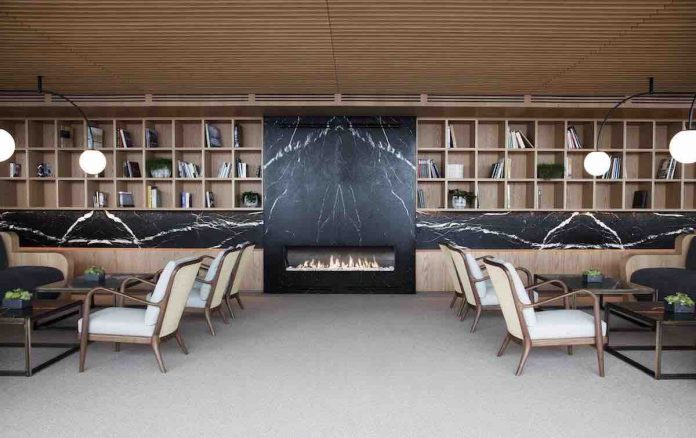
The lounge, has also been aligned to the architecture, which gathers the desired sensation of the warm textures, light, and materials, whilst distinctively characterizing the design of the furniture by Mecanismo. With access to the deck and terraces the outstanding and remarkable views grant the position of Akelarre in the pronounced hill of Igueldo.
At the same level, the wine cellar is conceived in two areas, as a tasting room and as a space of conservation and exposition, divided by a large curved glass. The tall table for wine tasting prevails the space, and the disposition of the lighting highlights the presence of the bottles as the most important elements of the restaurants wine cellar.
The wellness space has been differentiated by a curved glass enclosure. A wet area distinguished by exceptional luxury swimming pool in stone, sauna and Turkish bath and an additional area with three independent capsules created by an innovative constructive system in stone for the visitors. The warm access to the niches in canvas and the five cabins as changing rooms, together with a gym, contextualize the space with an exclusive aesthetic taste.
A project that combines both the essence and innovation of Akelarresan with the conceptual design and dedication that defines Mecanismo as a whole.
Project: Akelarre Hotel
Location: Monte Igueldo, Donostia, San Sebastian (Padre Orkolaga Ibilbidea, 56, 20008 Donostria, Gipuzkoa)
Authors: Marta Urtasun and Pedro Rica Project date: 2016-2017
Completion date: 2017
Area (m2): 3.688,60
Client: Pedro Subijana Photographs: Kike Palacios
Project Architecture project: mecanismo Facilities project: EOS Project of structures: Engineering Mecanismo Lighting project: mecanismo
Collaborators Construction and painting: Orizki Facilities: Ondoan Glassmaking: Arzabal Wood floor: Konige Hozl Locksmith: Serman
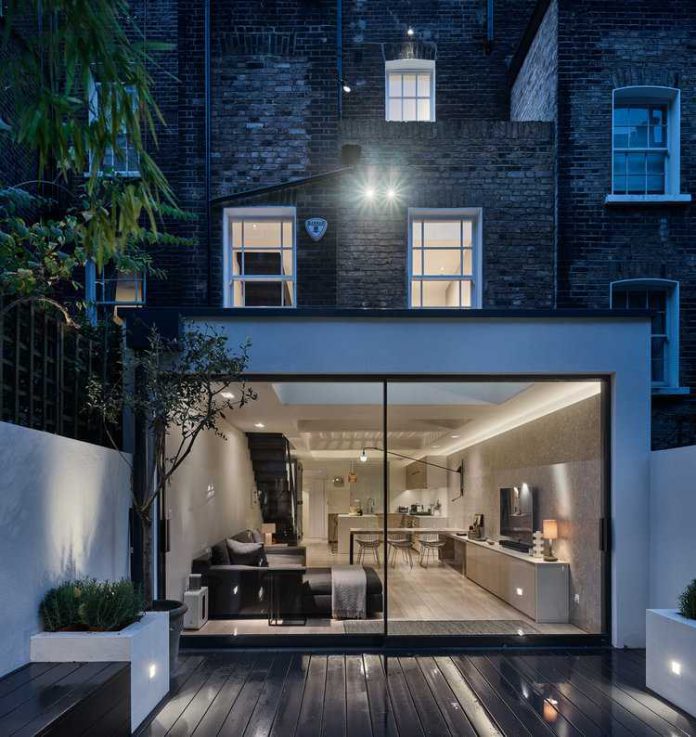
A restrained palette of industrial materials – raw concrete and blackened steel, combine with refined glass, timber and carefully detailed plasterwork to create a relaxed but crisp interior. To solve the issue of a dark and unwelcoming basement level so common in this building type, we have introduced a ground floor made up entirely of footpath paving lights, common on every London commercial street – repurposed here to allow natural light and activity to connect the first two levels of the building.
Starting at basement level a handmade steel staircase connects to the ground floor and then works its way up to the first floor, at which point the solid steel plates transform into a perforated metal spine which cuts right through the building to the top floor. The stair from first floor to the top have been realised as a continuous timber sculpture, again completely handmade and finely detailed.